Das Gruppe on the Wall by Paul Hanley
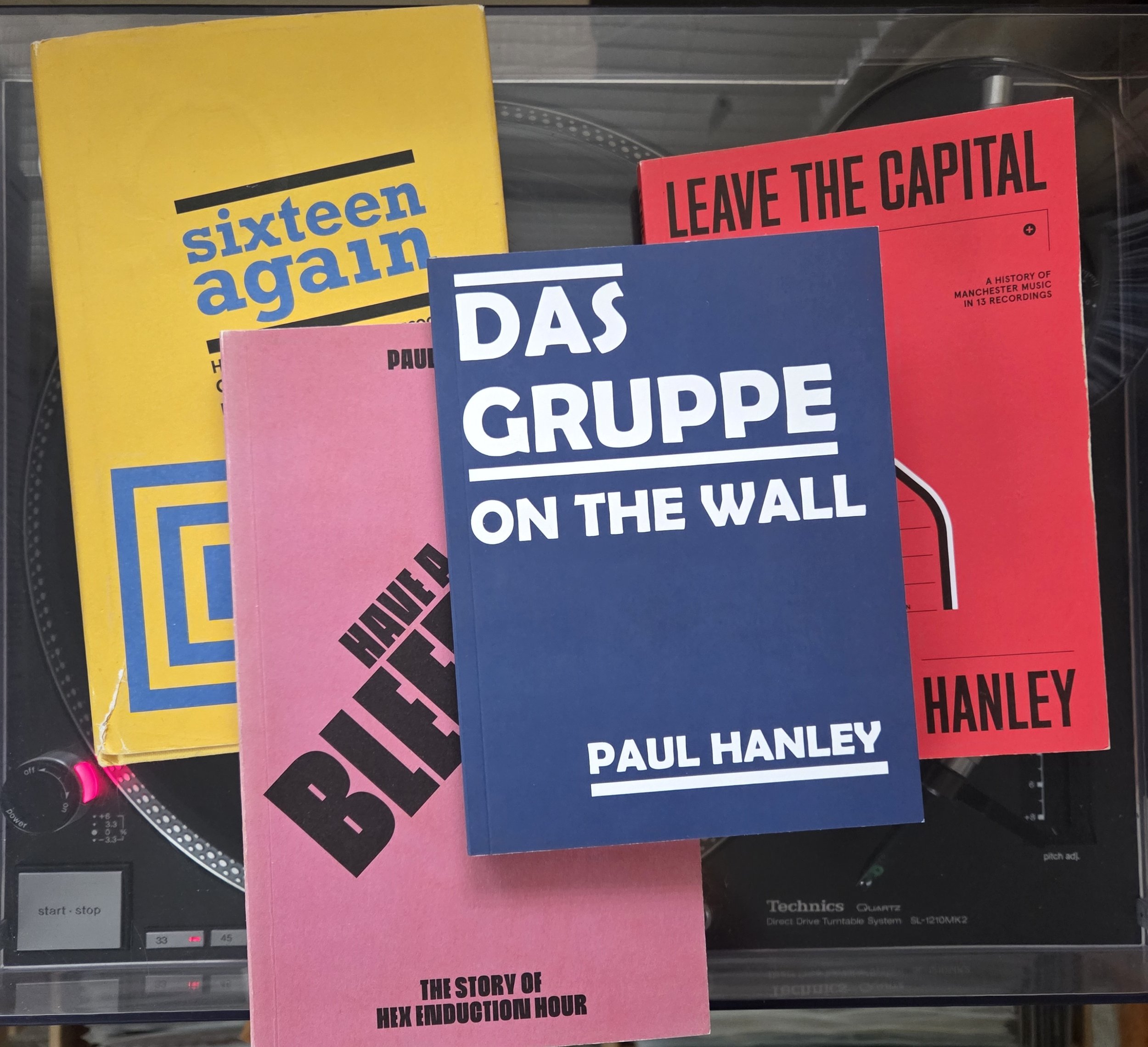
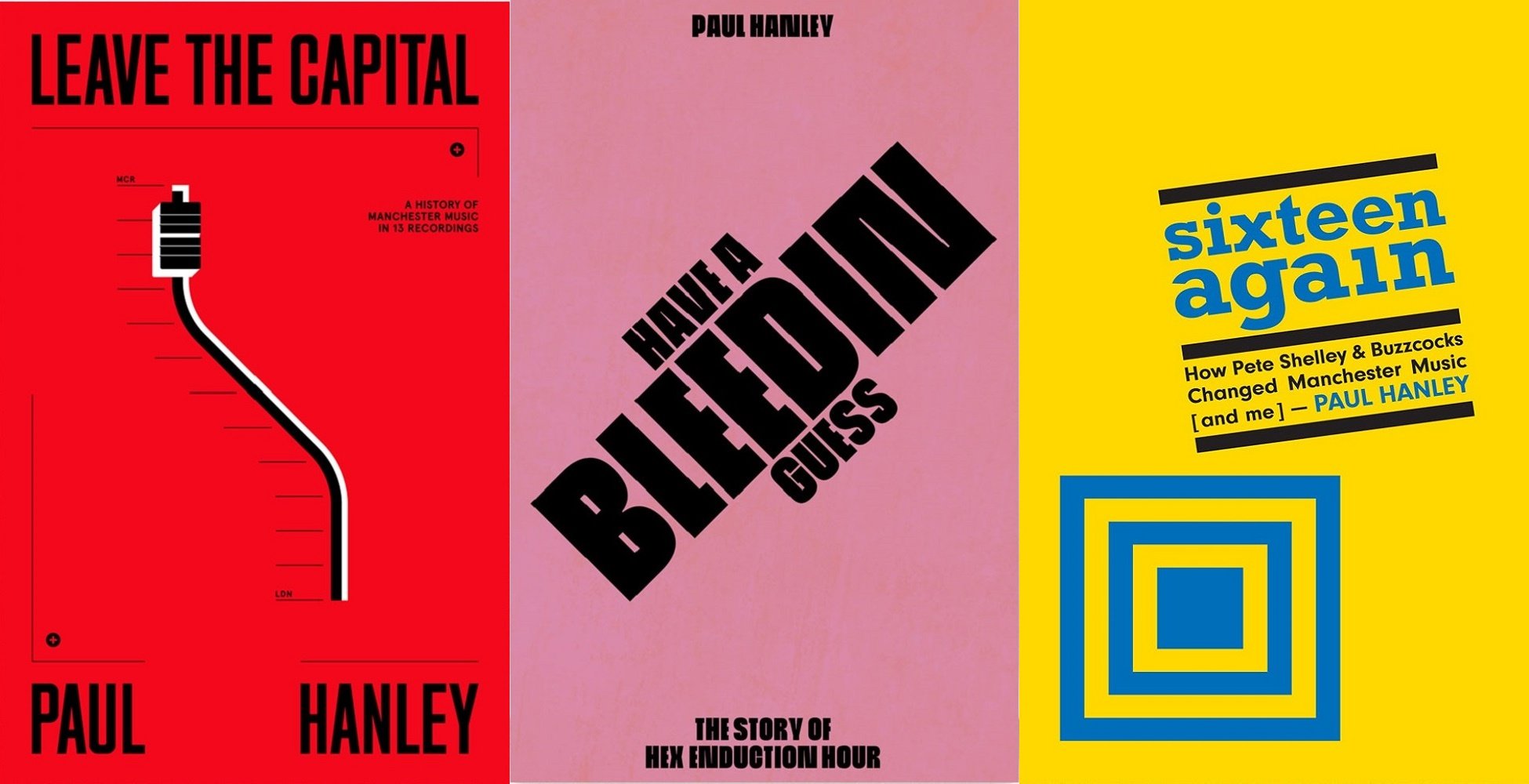
Paul Hanley drummed in The Fall from 1980-84. His books include: Have A Bleedin Guess: The Story of Hex Enduction Hour (his first-hand account of the recording of one of The Fall’s essential albums); Leave The Capital: A History of Manchester Music In 13 Recordings (the story of the Strawberry and Pluto recording studios) and Sixteen Again: How Pete Shelley & Buzzcocks Changed Manchester Music (and me). All published by Route. He co-hosts Oh! Brother - a podcast about The Fall, with his brother and former Fall bass player, Steve Hanley.
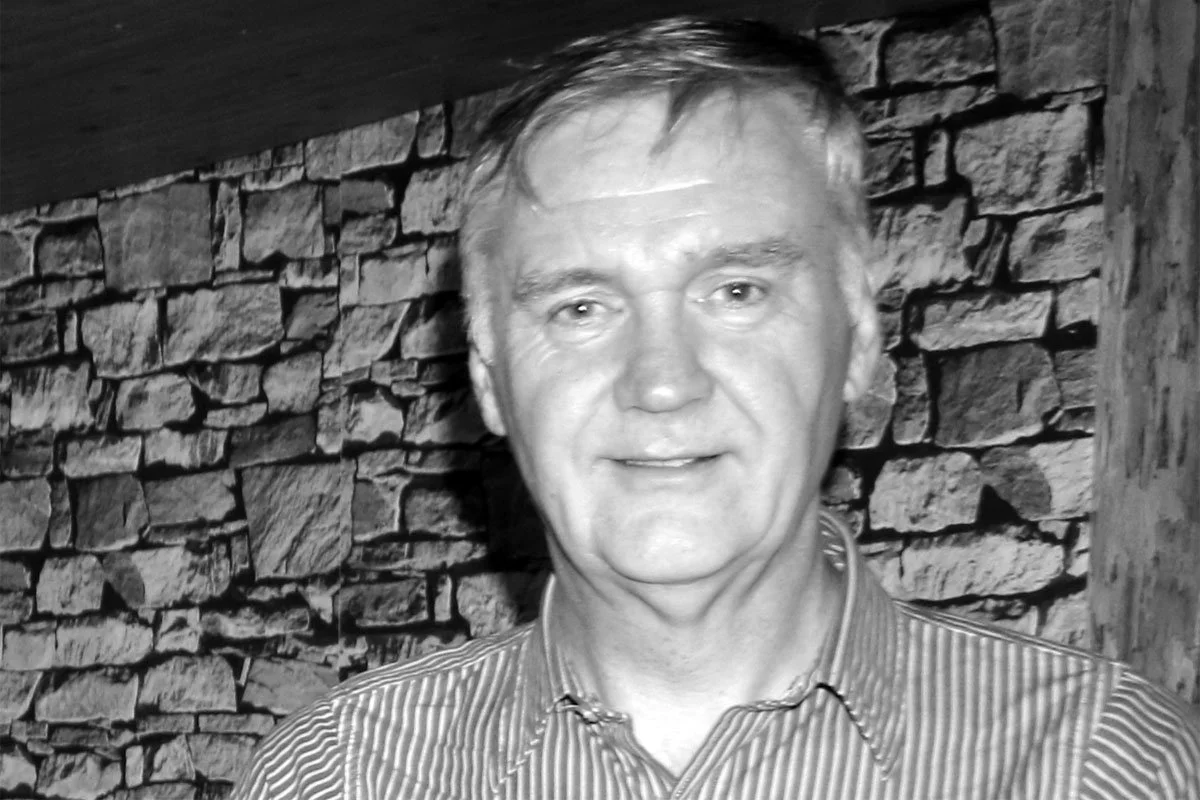
Paul Hanley
I recently spoke to Paul about the legacy of The Fall, the Futures and Pasts festival, Popstock Records, House of All, the Oh! Brother podcast and his latest book, Das Gruppe on the Wall.
Das Gruppe on the Wall, a monograph about The Fall and the gigs they played at Band on the Wall, has just been published.
It’s not exactly War and Peace, is it? I like “pocket book” because it fits in your pocket, but monograph sounds a bit posher than “little book”.
Music fans will have read about a lot of Manchester venues: the Haçienda, the Russell Club, the Electric Circus and the Lesser Free Trade Hall. Tell me about Band on the Wall?
The Band on the Wall preceded all of those venues. It started as a pub in 1803. It was the George and Dragon first and in the 1930s in order to save space the guy who ran it built a stage halfway up the wall for the musicians. So it was nicknamed “the band on the wall”, and then that became its name. The Manchester Musicians’ Collective used it as a venue, that’s why The Fall, Joy Division and lots of other bands played there. The Musicians’ Collective was the first place where bands with no equipment could get up and play, it was very pivotal in the explosion of ‘76 and ‘77. The other venues are gone but Band on the Wall is still there and its longevity is something to be celebrated.
The Fall played Band on the Wall eight times.
They played it in two blocks. The early band played there in ‘77 and ‘78, and the band I was in played three nights on the run in 1982. In theory we could have played somewhere three times the size. It had nothing to do with me, it was obviously Mark [E. Smith]’s choice.
One of the 1982 gigs was bootlegged in an unusual way?
That’s right, the bootleg of the second night that exists is this snippet of just four songs because the guy couldn’t get in and he recorded through the letterbox. I don’t know what happened. Maybe the police came and arrested him or something, but it shows quite the dedication. God knows what the recordings are like.
The Fall Futures and Pasts festival, a celebration of 50 years of The Fall, was held in the Band on the Wall in June. What was the highlight of the festival for you?
The whole thing was a highlight. Myself and Steve [Hanley, Paul’s brother] did most of the planning with Route, who publish our books, and the Louder Than Words literary music festival. It was just fantastic. Everyone was really happy to be there and really friendly. There was lots of ex members of the band and loads of people travelled from all over the world: people from California, a couple from New Zealand, a guy from Finland. It was just a really satisfying experience. The festival was Steve’s idea originally. He got an email from a guy who just wanted to thank him because being a fan of The Fall had really shaped his life; he met his wife at a Fall gig; he met lots of his best friends at Fall gigs. The idea was to do something for the fans. Obviously The Fall can’t exist anymore, so it was just nice to get to do something for the community.
You’ve been releasing live Fall recordings on Popstock Records. What’s the idea behind the label?
When a lot of bands split up the surviving members have some kind of agency over what goes on. The Fall is not like a lot of bands. There are lots of releases, many of which have absolutely nothing to do with the people that, rightly or wrongly, played on those records or played at those gigs that get released as live albums. Some of them, certainly not all of them, are of pretty shoddy quality. The idea is that myself, Steve, Craig [Scanlon] and Marc [Riley] can get some agency over recordings of when we were in the band, and put something together that’s really quite appealing. A lot of time is spent enhancing the recordings. Obviously you’re dealing with a time where things were recorded on cassette. We get them sounding as best as they could possibly sound, and then we take a lot of time over the sleeve notes and some fantastic people have designed the sleeves. It’s a really nice product. Hopefully Fall fans don’t feel ripped off.
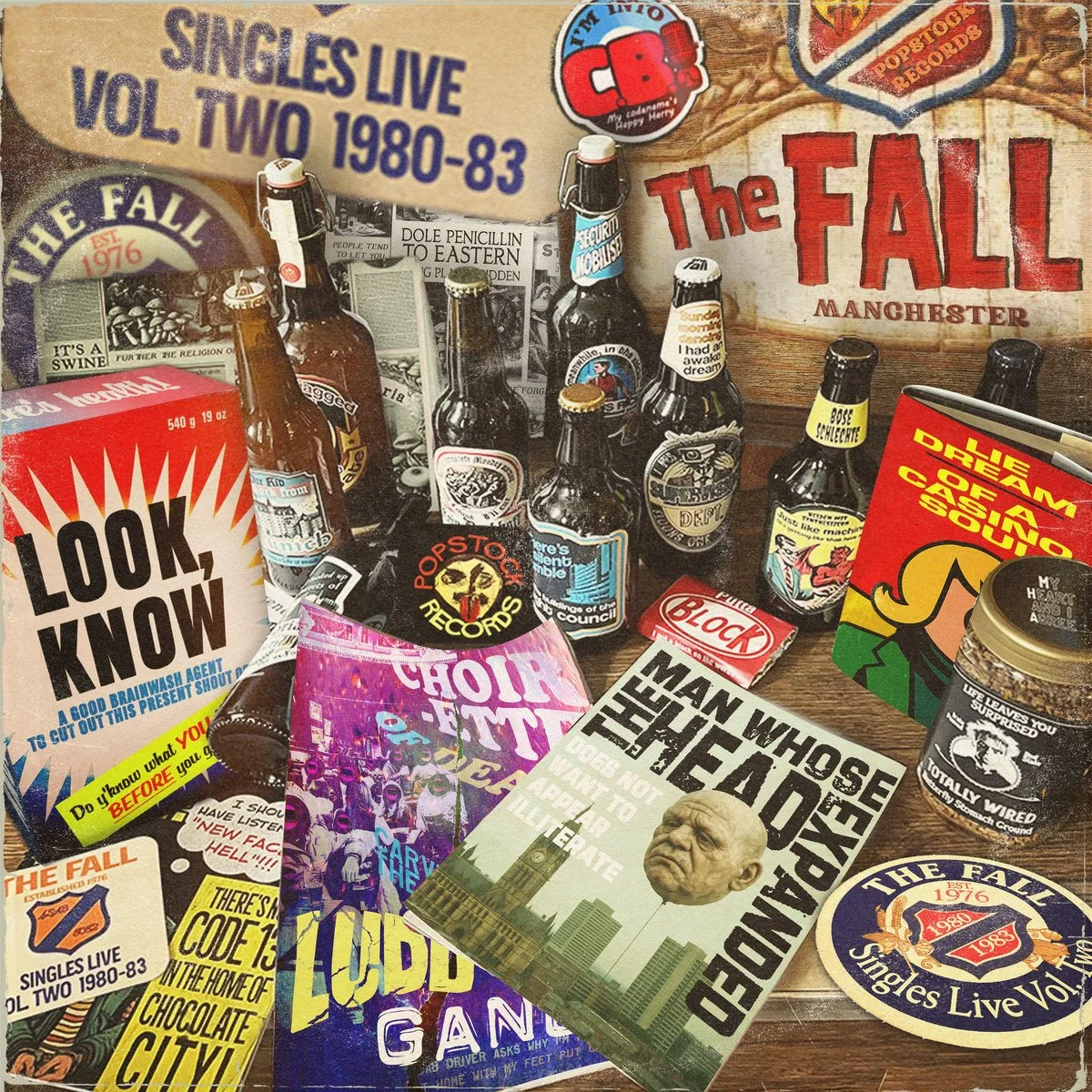
The Fall Singles Live Vol 2 (Popstock Records, 2026).
The Fall Singles Live Vol 2 has just come out.
Vol. 1 took you from the earliest single up until 1979. This one is 1980 to 1983. Vol. 1 had lots of different lineups, the Martin Bramah and Karl Burns era up until up until before I joined. This one is pretty much the lineup that recorded Hex Enduction Hour. It’s a bit more cohesive in that respect. I’m really pleased with it. The interesting thing you can do with Fall live albums, that you can’t maybe do with some other bands, is showcase versions of a song from before it was recorded, and then versions of a song from after it was recorded. You can hear the progression because in many ways The Fall never stood still. Mark said it on occasion about his lyrics: they’re never finished. Just because you’ve recorded them on vinyl, that doesn’t mean you can’t do interesting things with them, they’re not set in aspic.
In the sleeve notes, Kid Congo Powers writes: “The Fall invented something that defies categorisation and connected with people around the world.”
Yes, it was really interesting at the recent festival to see people from all over the world who on the face of it have only one thing in common - a love of The Fall. You could imagine that they wouldn’t get on at all, but it’s a real community of Fall fans. I think that was something Mark recognized in his life. He always had a lot of time for Fall fans and he always took time to big them up and to say that they were different from fans of other groups.
It seems as if The Fall are bigger than ever.
We have said that, it just seems to be that the profile of the band is higher than it’s ever been. The Fall benefit from a bit of distance in some ways. When The Fall were going, it seemed to be disrespectful to the current version to hark on about the old stuff, I think that’s certainly how Mark saw it. Sadly, it’s all the old stuff now. So people are able to take a look at the panoply of the Fall oeuvre, and as a whole, it’s pretty impressive.
House of All have released four albums in as many years, will there be a fifth?
When you say it like that, it sounds quite impressive, but I don’t think one album a year is killing yourself, but Martin [Bramah] has called time on House of All. It was a great privilege to play with everyone in the group and Steve and I are very proud of the records and gigs we did together.
On the Oh! Brother podcast, yourself and Steve have interviewed lots of ex-Fall members, it’s great hearing their perspectives on the band.
It’s fascinating, and it’s one of the things that fed into the festival and House of All. There is a collective experience of being in The Fall which you might not think there would be. In House of All we play with Pete Greenway, who was in the last iteration of The Fall, and we had Keiron [Melling] on the podcast who was the last drummer. The reason we started the podcast was to emphasise what a great privilege and honour it was to be in The Fall, and that’s been the experience of everyone we’ve spoken to. Everyone has said that it was great being in The Fall. We’ve spoken to lots of people who were in The Fall, they’re all great, fascinating, interesting, clever, talented people. I think Mark had a good recruitment policy.
Are you working on a new book?
I’m working on a book about Wythenshawe, the area where I grew up. It’s seven or eight miles outside Manchester. When Manchester started redeveloping the inner city, they knocked down all these back to back terraces and shipped people out to Wythenshawe, which was a new council estate, working class people in council houses, but they were going to get a garden city to live in and we did. I’ve spoken to Johnny Marr for the book. His experience is similar to ours, he was from Ardwick, which is in the city, and his family were given a council house in Wythenshawe. It was seen as a great opportunity, two gardens, two toilets - both indoors! One of the things I touch on is a generation of immigrants from Ireland. If you look at the talent from even 1976 onwards, there was a large amount of children, whose parents moved over here, there was a lot those in Wythenshawe. It’s about the culture of a working class town. So hopefully it will resonate with people from all over the place rather than just from within.
For Further Listening…
For Further Reading…
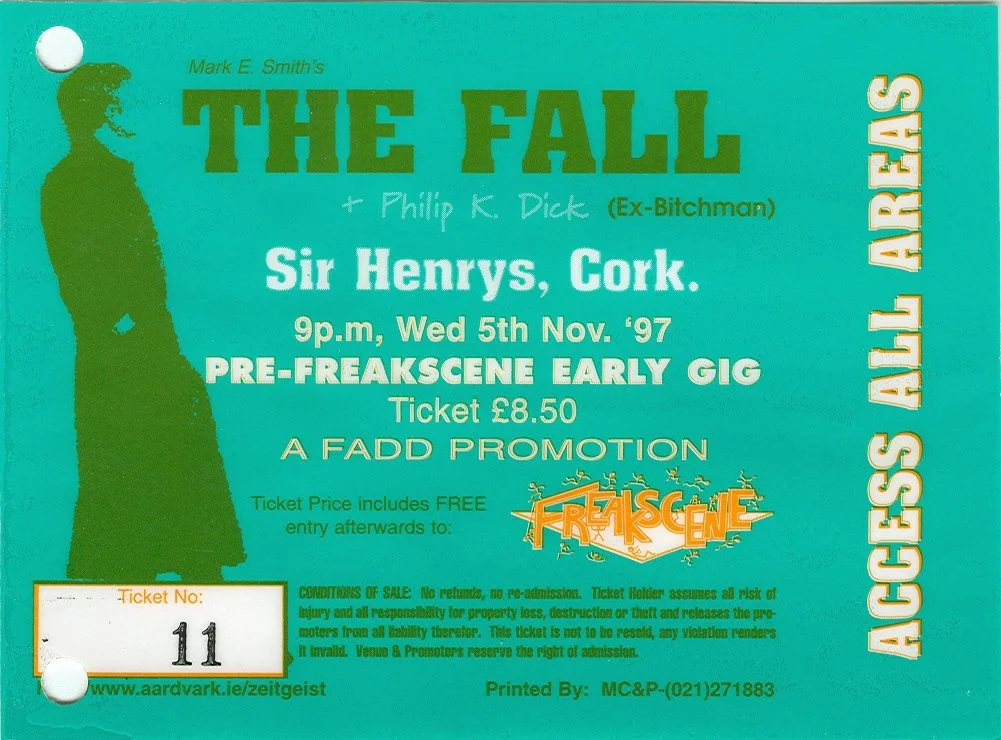
A few words on The Fall taking in: The Fall at the Arcadia in 1980, The Fall at Sir Henry’s in 1997. Mark E. Smith, Dave Simpson’s The Fallen, Freakscene and Gigantic at Sir Henry’s, The Beatles, Freakscene flyers, Uaneen Fitzsimons and No Disco, The Fall’s Levitate, The Fall at The Pavilion in 2012, and Rob Anthony’s Number One Fan comic strip.

A few words on Skin and Bone taking in: John Robb’s Death to Trad Rock, the post-punk mid-80s fanzine scene, Five Go Down to the Sea?, The Mekons, The Membranes, The Fall’s Brix Smith and Craig Scanlon, A Witness, Big Flame, and more.