Crazy World: the return of The Sunshine Club
A few words on San Francisco’s The Sunshine Club, Glitterhouse Records, mid-90s indie, protest songs, creative returns, David Byrne’s Sleeping Beauties and a Q&A with the band’s Sean Coleman.
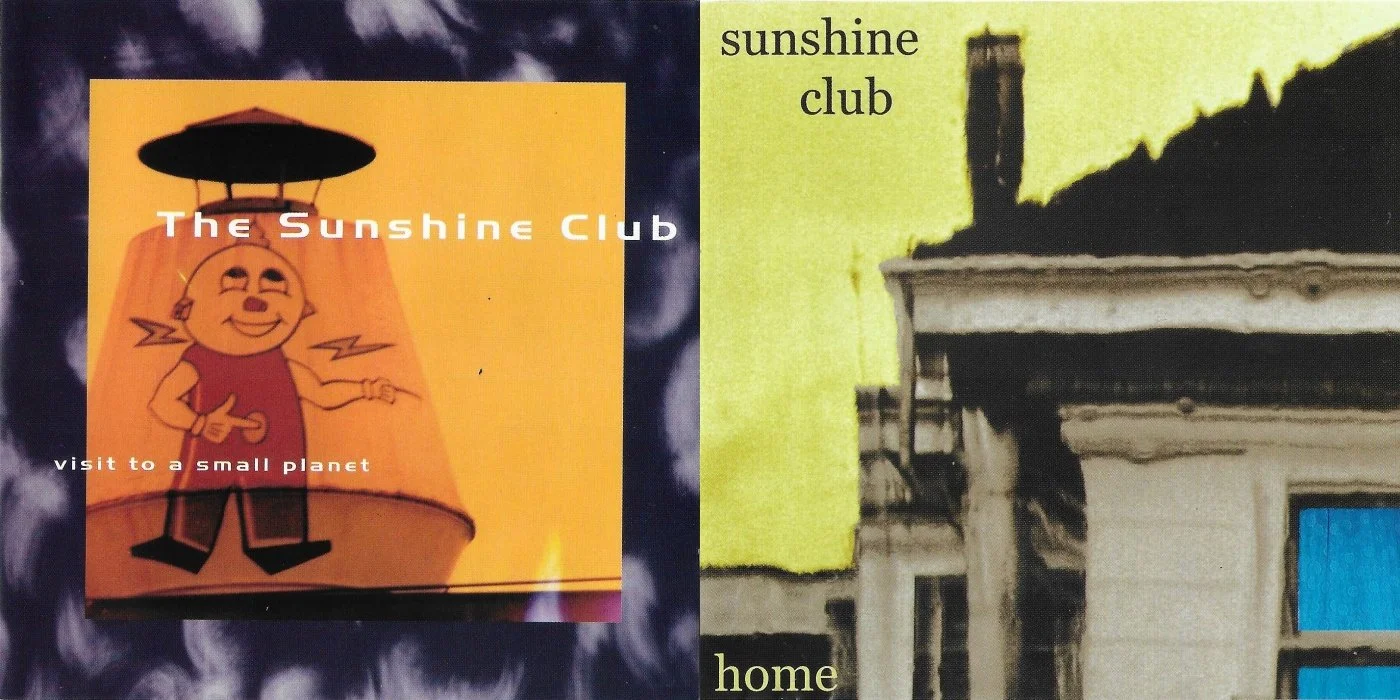
Visit To A Small Planet (1998, Glitterhouse Records) and Home (1999, Glitterhouse Records).
The message landed in early August. “Breaking news,” wrote my friend Sean Coleman.
“Out of the blue, Denise from The Sunshine Club started writing after a long hiatus. I just finished mixing the first new song in 25 years, and as one of the few people over here who remembered the band, I thought I’d ping it over.”
I downloaded the file with trepidation. What if I didn’t like the song? What would I say to Sean?
I needn’t have worried.
A week later I messaged, “This song has been in my head for days.”
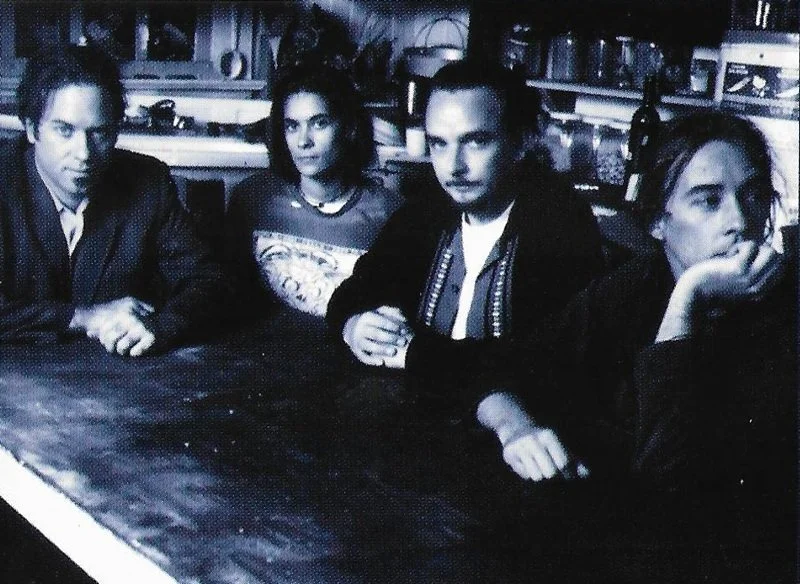
The Sunshine Club: Sean Coleman, Denise Bon Giovanni, Paul Comaskey and Simon Colley. Photograph by L. E. Hayman.
I first met Sean Coleman about 12 years ago. Our sons were in the same class. We met at the school gate and very naturally gravitated towards each other. Conversation was quick and fast, chatting about music and tunes and bands, common ground was reached in minutes. Sean is from the States and was recording and playing with different bands in Dublin, at some point I asked him if he had been in a band in America?
“I was, but you probably wouldn’t have heard of us.”
“Try me.”
Not only had I heard of The Sunshine Club but I have their two albums and consider myself a fan. What were the chances?
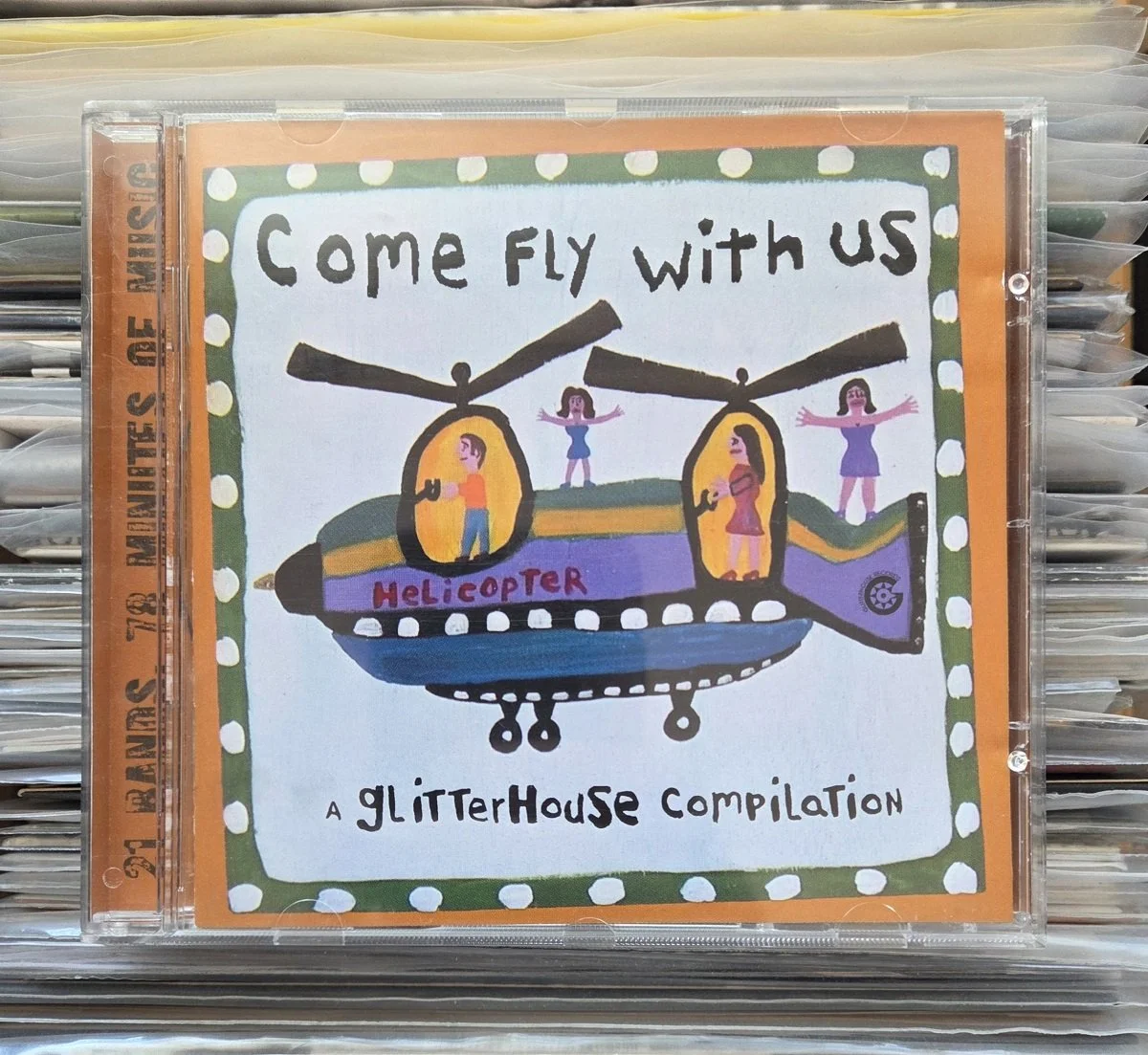
Come Fly With Us (Glitterhouse Records, 2000). Photograph by Paul McDermott.
At some point in the late 90s I was added to Glitterhouse Records’ mailing list. I was presenting radio programmes on Community Radio in Cork and Dublin and doing a bit of reviewing.
At the time Glitterhouse Records were releasing a lot of Americana, or New-Country as it was termed. One of the earliest packages that came my way from Glitterhouse HQ in Beverunge, Germany contained a label compilation titled Come Fly With Us.
It had songs by The Walkabouts, Knife in the Water, Neal Casal, 16 Horsepower and others. It had songs by Dakota Suite from Leeds and Midnight Choir from Norway. It also had a song called ‘Happy Song’ by The Sunshine Club.
The sleevenotes said that, “Rising from the ashes of San Francisco’s sadcore and alterna-rock scene, The Sunshine Club made quite an impact with their debut album Visit To A Small Planet. It was picked up for European release via Glitterhouse after a convincing live show during Austin’s SXSW in March 1998.”
There was enough there to pique my interest. ‘Happy Song’ was great, to me it seemed more poppier than the description of the band from the sleevenotes, it was closer to indie-rock than sadcore or new country. I wanted to hear more.
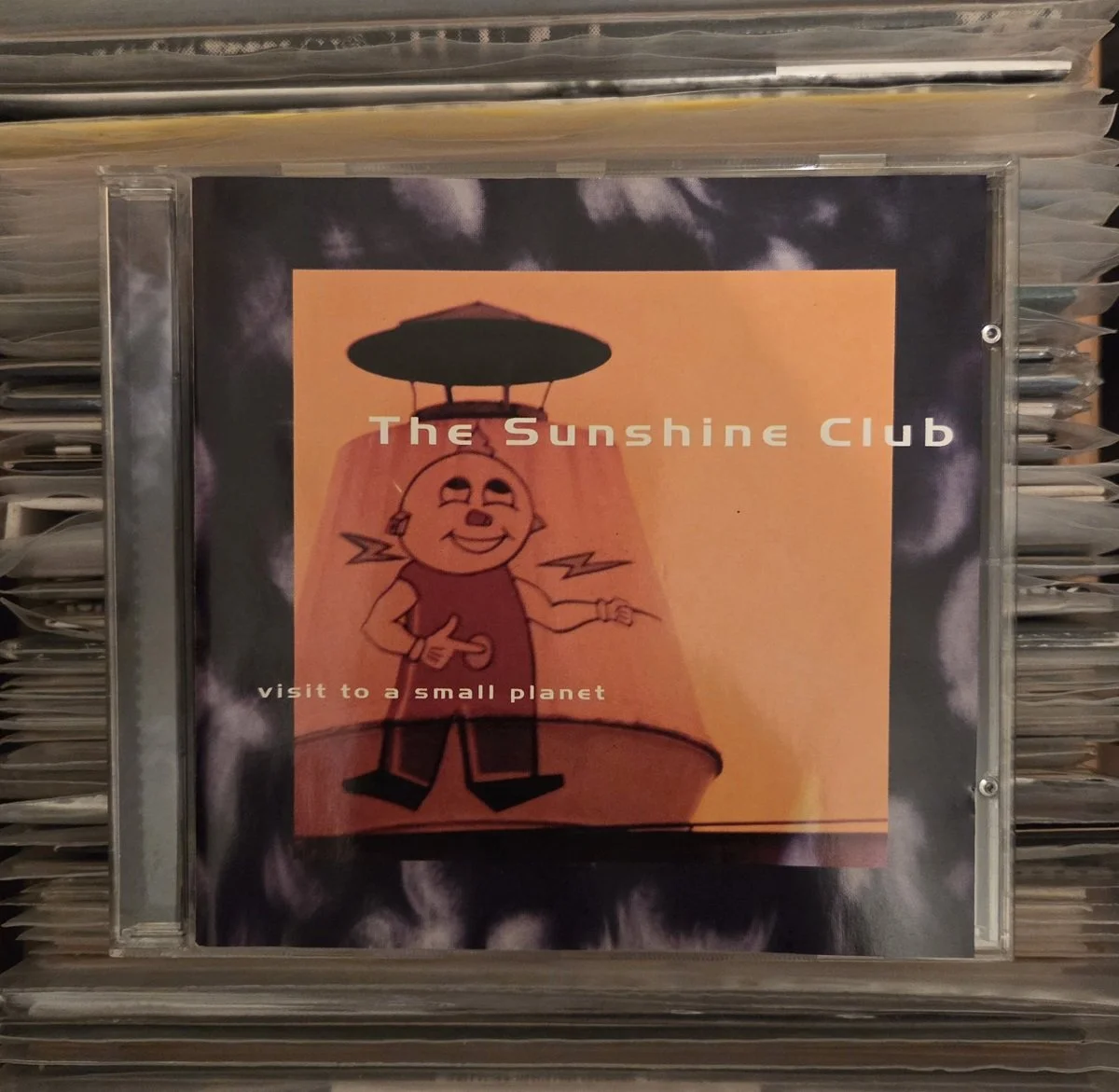
Visit To A Small Planet (1998, Glitterhouse Records). Photograph by Paul McDermott.
Glitterhouse came good and sent the albums my way.
The Sunshine Club were songwriter Denise Bon Giovanni (vocals and guitars), Sean Coleman (guitars, organ and backing vocals), Simon Colley (bass) and Paul Comaskey (drums).
Visit To A Small Planet, Sunshine Club’s debut was originally released in 1995 on Roswell Records in the US and then reissued by Glitterhouse Records in Europe in 1998. It contains ‘Rainy Day Friend’ and ‘Sunshine Maker’ - with its gorgeous acoustic guitar and strings - two of my favourite songs by the band and of the era. The Sunshine Club could write melancholic pop songs but the slow-building ‘Steiner St’ also revealed the band weren’t afraid to experiment.
The album ends with the band’s version of ‘The Look of Love’. Imagine having the nerve to cover Bacharach and David’s classic on your debut album. They pulled it off with aplomb, leading Snack Cake - the pop culture magazine from Berkeley, California - to describe the band as, “Crazy Horse covering Burt Bacharach, or Dusty Springfield fronting American Music Club.”
Martin Williams reviewed Visit To A Small Planet for the much-missed (by me at least) Comes With A Smile magazine writing, “With a mood that’s signposted in the title of their strolling opener - ‘Happy/Sad’ - The Sunshine Club offer up a rootsy cocktail for anyone with a taste for a blend of Mark Eitzel and the Cowboy Junkies.”
He continued, “Like a down-home PJ Harvey or the Sinéad O’Connor of ‘Black Boys on Mopeds’, Visit To A Small Planet has the glimmer of a mellow gem.”
Peter Blackstock founder of No Depression also namechecked the Cowboy Junkies when he wrote about the band in the magazine, “At times reminiscent of the Cowboy Junkies, The Sunshine Club ultimately emerges as more inventive and, at times, more intense than that Canadian ensemble - not to mention less overtly country.”
Blackstock was right, The Sunshine Club were “less overtly country” than a lot of the bands they were being namechecked alongside or indeed most of Glitterhouse’s roster.
Blackstock, was beguiled by the band writing, “the spirits are taking sonic form as well, drifting on the wings of the Sunshine Club’s alluring, ethereal music and singer Denise Bon Giovanni’s subtly enchanting voice.”
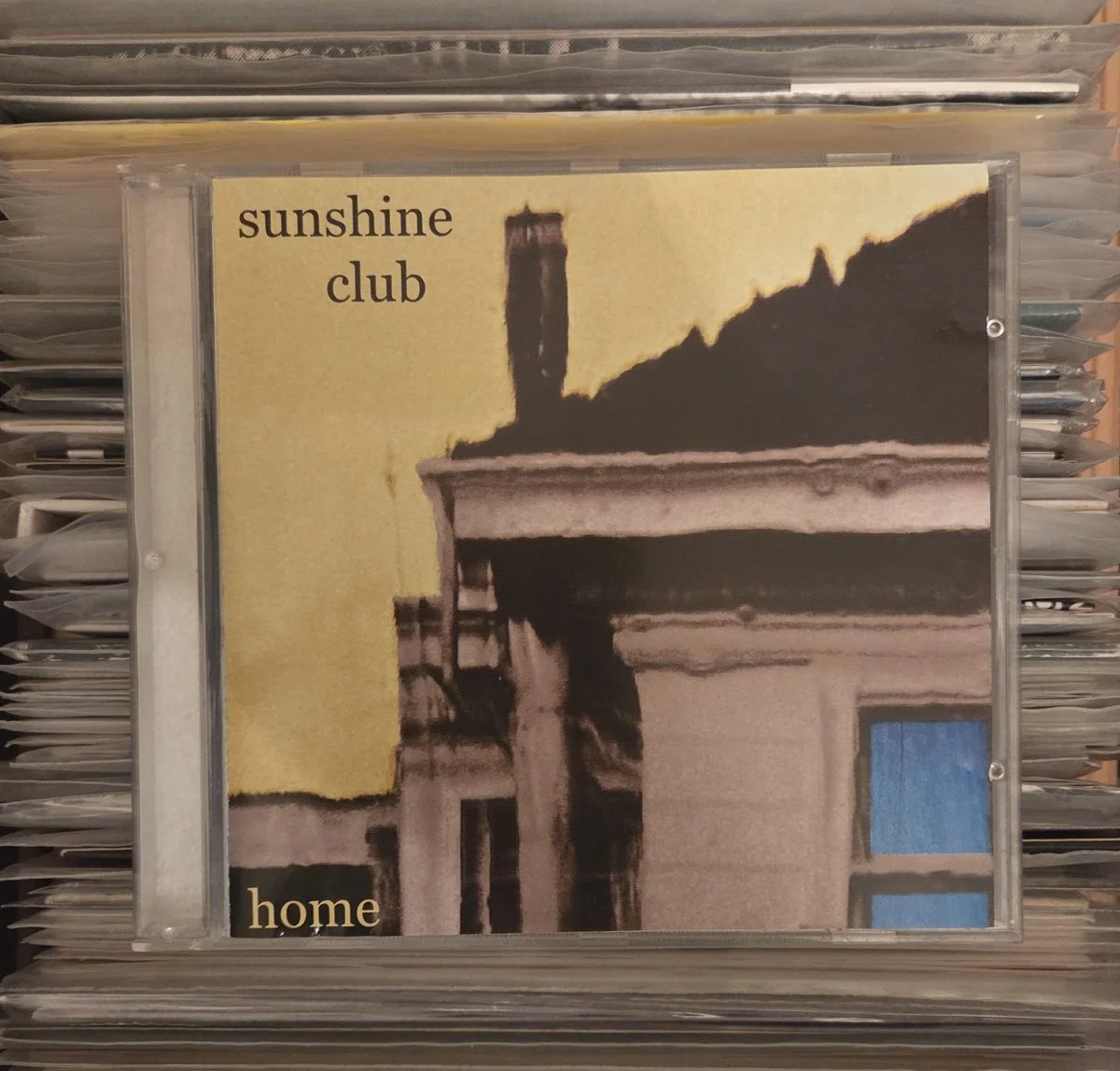
Home (1999, Glitterhouse Records). Photograph by Paul McDermott.
Home, the band’s second album, is another really strong collection of songs and of the band’s two records, it’s the one I return to more.
Glitterhouse described Home as, “An intriguing collection of sad, yearning songs that spin like a cloudy breeze through the windmills of your mind. At times ethereal, then lilting and delicately melodic, and every once in a while bursting with energy.”
‘Take Your Place’, the album’s penultimate track, is one of the band’s strongest and its use of cello, saw, and effects really showcase the inventiveness of the band’ production at this point in time.
And that was it, two albums and The Sunshine Club were done.
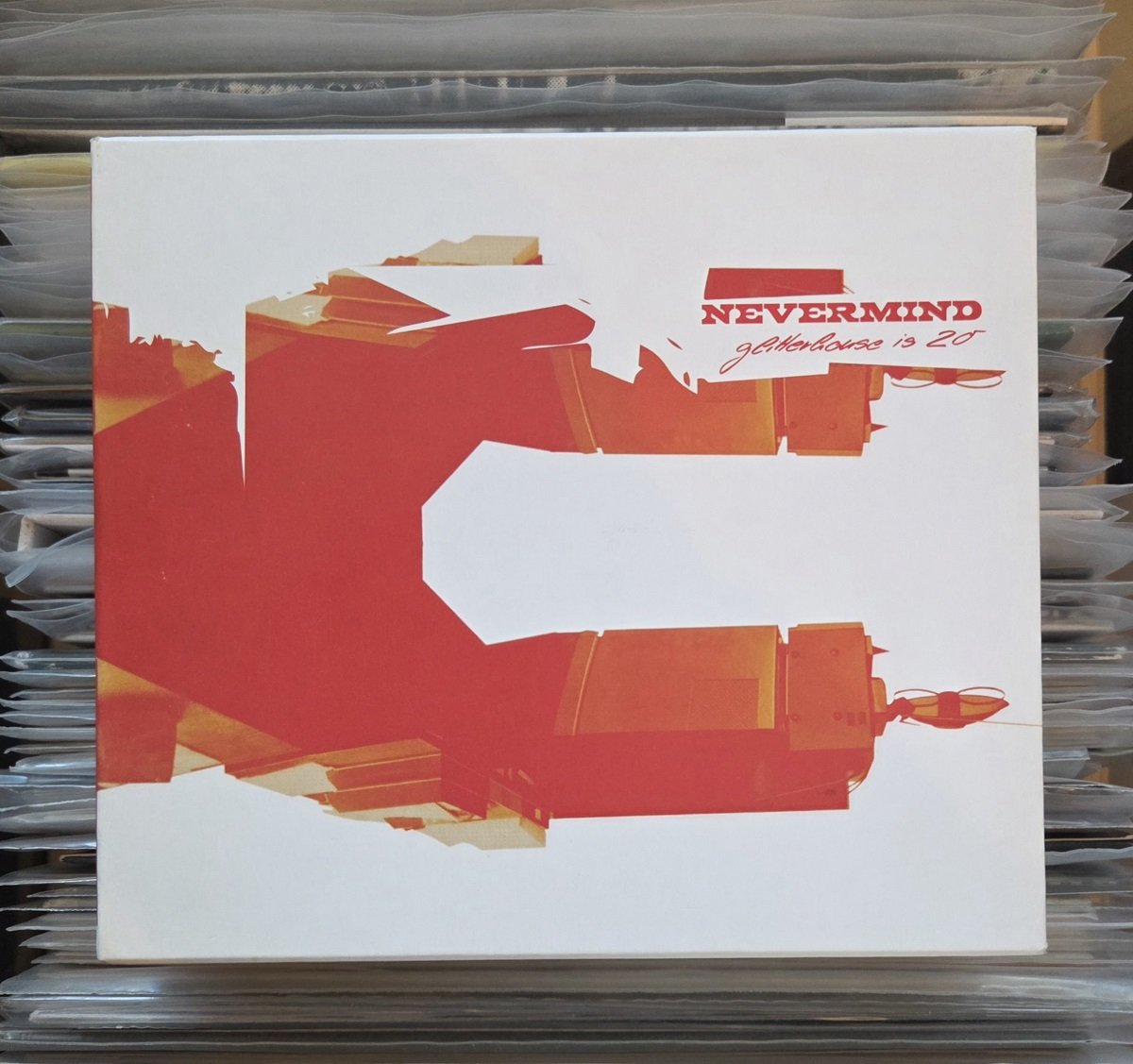
Nevermind: Glitterhouse is 20 (Glitterhouse Records, 2004) a 3xCD celebration of the label. CD3 “Classic Tunes of Glitterhouse Records” features ‘Lonesome Valley’ by The Sunshine Club. Photograph by Paul McDermott.
Twenty-five plus years later they’ve returned.
Earlier this year Denise Bon Giovanni wrote ‘Crazy World’ and sent it to Sean Coleman.
It’s a protest song, a call to action - “get off your knees and finally take a stand”.
It’s a brilliant tune, Bon Giovanni strums her guitar and targets her ire: “A madman on a golden throne has never been so proud, to terrify the innocent and grow his bank account”. Coleman fills the spaces with haunting lap steel guitar. The song climaxes with the lines: “I’m not mad at you” and “Are you okay?”
“I’m not mad at you”, the final words spoken by Renée Nicole Good, the 37-year-old writer and poet and mother of three killed by ICE agents on 07 January.
“Are you okay?”, the final words spoken by Alex Jeffrey Pretti, the 37-year-old intensive care nurse killed by US Border Patrol agents on 24 January.
David Byrne’s Sleeping Beauties: Why Good Ideas Go Dormant and How To Wake Them Up (Canongate, 2026) is about forgotten ideas in music, art, science, technology and economics and how good ideas fall in and out of favour. Byrne writes:
“In my own experience, measuring the value and influence of some things (records, books, films, theories, and artworks), using numbers of citations or some equivalent (sales, reviews, viewership, awards), doesn’t accurately represent a thing’s true worth or importance. Many things can have an outsize influence despite low general recognition. Numbers don’t tell the whole story.”
These words resonated with me. I’ve spent a few years producing a podcast about Irish records, most of which (to my mind) could easily be described as “sleeping beauties”. In the last fortnight social media is awash with the “My 9 Albums” trend, wherein music fans complete a 3×3 grid showcasing 9 albums that shaped their musical identity. I thought for a minute about completing my own grid and quickly realised that it would be filled with albums that are generally regarded as “flops”. I abandoned my grid for fear that my choices would be deemed pretentious or purposely ostentatious.
As I was listening back to the two albums produced by The Sunshine Club I thought about the concept of “sleeping beauties”.
Musical returns aren’t often this angry, they’re also rarely this good.
Q&A with The Sunshine Club’s Sean Coleman
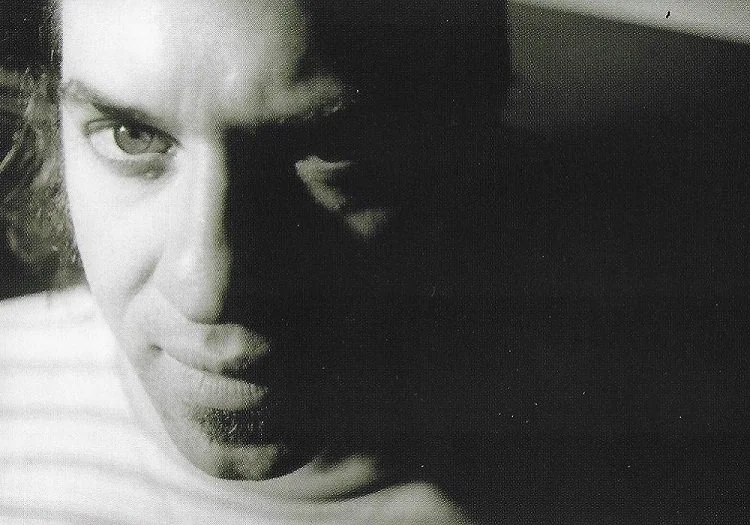
Sean Coleman circa Home. Photograph by Nikki Pratchios.
Paul McD: You’re originally from Virginia, how did you end up in San Francisco, and how did The Sunshine Club come together?
Sean Coleman: Denise and I met up in San Francisco in early 90s, she was playing in a band called the Old Joe Clarkes with Mike Coykendall and I had a band called Farmgirl. The two bands played at a Memorial Day BBQ at Bottom of the Hill and the two of us started collaborating soon after. We met up with a pair of Brummies who had played as a rhythm section since they were kids - Paul Comaskey and Simon Colley - and they rounded out the group. The funny thing is that Denise and I realised we had grown up within 10 miles of each other in Virginia.
PMcD: Visit To A Small Planet was recorded with producer Wally Brill. As a fan of both The Sound and The Icicle Works I’m familiar with his name. How did that come about?
SC: He was managing American Music Club and took interest in us - easy to remember since we both had “Club” in the name. Wally is a truly unique character who started in the record biz with Roulette Records in late 60s and has produced some important records. I think he is currently teaching robots how to not kill us nowadays. I’m not sure how that is going. He swung a deal to get us into the Record Plant in Sausalito when Metallica had it rented for a year. They weren’t using the old Sly Stone recording suite so we got 10 days straight to record and mix the first album.
PMcD: How did the band come to the attention of Glitterhouse Records?
SC: Peter Blackstock had written some nice things about us in No Depression and the German company took notice. We met Reinhard and Rembert [Reinhard Holstein and Rembert Stiewe, Glitterhouse founders] from Glitterhouse at SXSW ‘98.
PMcD: Glitterhouse were doing a lot of Americana/New-Country type stuff at the time. Did The Sunshine Club feel a kindred spirit with that kind of sound?
SC: We weren’t completely a comfy fit with Glitterhouse, we were more 60s pop and experimental noise than the straight Americana roots thing that they were doing.
PMcD: Did The Sunshine Club get to tour outside of California?
SC: We did a fair amount of touring and showcases from LA to NYC, Seattle to Austin. We even won the Grammy Best Unsigned Band contest in LA in ‘96 which was rather surreal. We got to attend the Award ceremony. We supported John Doe, The Blue Aeroplanes, Mazzy Star, Stuart Staples, Tarnation, Low, Dirty Three, Red House Painters, Chuck Prophet and others. We tended to be lumped into the sadcore realm but again we were not wholly in that category.
PMcD: Did Glitterhouse ever get the band over to Europe?
SC: Unfortunately, not. I think we would have gone over well. It was funny for me living in Ireland for the past 18 years and running into people here and in UK who know our records. It screams of a missed opportunity.
PMcD: For Home the band slimmed down to a three-piece and you took more control over the production, is that a fair representation?
SC: Sadly Paul had left the band in ‘97 to be a responsible adult so we forged on recording with our friend Desmond Shea. We had several drummers on the record but mainly Joey Byrnes who had played with Tarnation. I was learning how to record at the time and did a fair amount of it at home (hence the stunningly original title). I think it’s a truer representation of what we were than Visit To A Small Planet. There’s also the “lost” record between Visit… and Home, it was recorded with Paul but never released at the time. It has some heavier numbers like ‘Codeine and Coffee’ and ‘Ugly Kid’, plus some interesting songs like ‘Soul Pony’ and ‘Sidecar’ that still hold up very well and show where the original 4-piece was headed. We released most of the tracks on Bandcamp last year when we put out the original two records.
PMcD: The band disbanded in the early 00s. How did it end and how did you end up moving to Ireland?
SC: We were all moving on in different ways and the wind had come out of the sails of the project to some extent. There had been a lot of high expectations talking to major labels over the years with nothing to show for it. We have always kept in touch but I figured the musical collaboration was a thing of the past.
I moved to Ireland in 2009, having visited several times on European tours with the Kelley Stoltz band. I then became reacquainted with an Irish lass I had met a few years before in SF.
My great great grandparents Patrick Coleman and Margaret Fallon left Co. Roscommon for North America in the 1850s and I became an Irish citizen last year. Full circle remigration, 170 years later.
I have found a niche repairing vintage musical gear for the Irish scene - customers include MBV, Just Mustard, Lankum, Liam Ó Maonlaí, Bothy Band, The Frames, Clannad, Damien Dempsey, Aslan and others.
PMcD: You’ve recorded with lots of Irish artists: Ger Eaton, The Next New Low, September Girls, Stano, Sean Carpio and loads of others. Tell me something about what you do, how you see your role?
SC: I’ve also worked with Lost Brothers, Cheap Freaks, Gavin Glass, Ellie O’Neill, David Kitt and others. I love capturing an artist in the moment and in the way they want to be heard. I try to be as transparent as I can but use my skills and vintage equipment to leave a document that is as true to them as can be. I’ll add lap steel, organ, harmonium, Wurlitzer for texture and flavour.
PMcD: What are you working on at present?
SC: I’m very busy with new Sunshine Club material, I’m starting Ger Eaton’s second record, I’m doing some stripped down recordings with Oisín Leech from Lost Brothers. I’m finishing up recordings with a songwriter from Brooklyn called Truman Flyer and I’m finally recording my own solo project, six decades in the making. I’m also planning a new collaboration with the Eels.
PMcD: Didn’t you go to high school with Eels’ Mark Everett?
SC: I’ve known Mark since I was 6 years old and we have been collaborating since high school. I wrote a song for his second solo pre-Eels LP Broken Toy Shop and produced/co-wrote two songs on the last Eels record Eels Time! Mark’s a fascinating character and good friend, we have been talking about working on a new project.
PMcD: There’s a searing anger to the words of ‘Crazy World’. How did the song come about and what was your reaction when Denise sent through a rough cut?
SC: Out of the blue last winter, Denise started sending me some really beautiful new songs. She had taken a step back from music and song writing for two decades but suddenly her antenna was catching new material. It resonated with me immediately - the hopeless and helpless feeling we have in the face of all the absolutely messed up stuff that we are facing these days. But there’s a call to action in there as well. It felt like such a classic protest song from the beginning.
I used to think we lived in such calm times compared to my grandmother who was arrested by Bolsheviks and survived the Spanish flu and my mother who fled the Nazis as a child. But in last 10 years, we have seen the same history repeating and it’s always the normal people who pay the worst price. That’s why we are donating a portion of proceeds from the song to Doctors Without Borders who help with the collateral damage inflicted by powers that be.
For further listening…
‘Crazy World’ is available on Bandcamp (Proceeds to Doctors Without Borders/Médecins Sans Frontières).
Both Visit To A Small Planet and Home are also available on Bandcamp.