Signal Found: a Boa Morte history
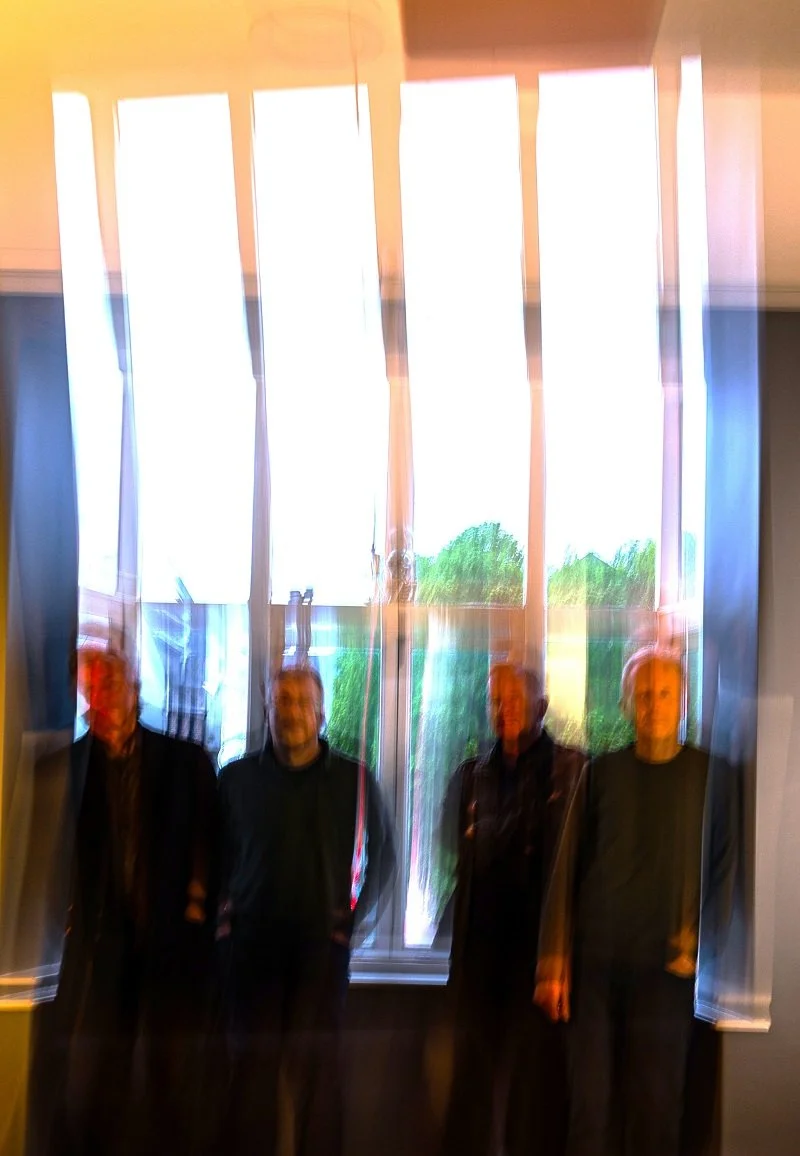
Boa Mote. Photograph by Fiona Tait.
Boa Morte return later this month with Signal: Lost, their fifth album.
In my December 2023 roundup of my favourite Irish albums of that year (Top 10 Irish Albums of 2023) I wrote that The Total Space, Boa Morte’s fourth album, “saw a progression of their sound palette from a slowcore aesthetic into more ambient and synthesised sounds. The results were mesmerising”.
On Signal: Lost the band’s signature near-whispered vocals, slow pace, and multiple layers and textures are complimented by electronic programming, brass and percussive instrumentation, found sounds, and electric piano. The organic and synthesised sounds meld to leave an otherworldly impression on the listener.
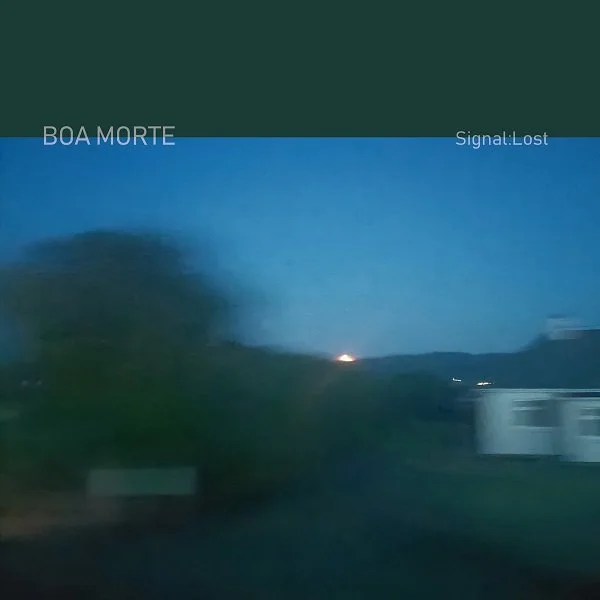
Signal:Lost (Gare Du Nord Records, 2026)
The album draws on elements of folk and Americana but is also suggestive of contemporary classical, jazz and post-rock. It’s an immersive record, in its quieter, sparser moments - when the hum of the studio’s room ambience, the vibration of a brushed cymbal or the pulsing of a tongue drum can be heard - I was even reminded of the atmospheres created by (dare I write it) late-period Talk Talk.
Boa Morte formed in the late 90s and released their debut album in 2002.
The four members first came together as Hubble in late 1996. For any band - with its original line-up - to be writing and recording together after almost 30 years is an incredible achievement. When the music they are making is as innovative, experimental and exquisite as that of Boa Morte’s, it’s worth taking a few minutes to rewind and remind ourselves of how they got here.
Here’s their story:
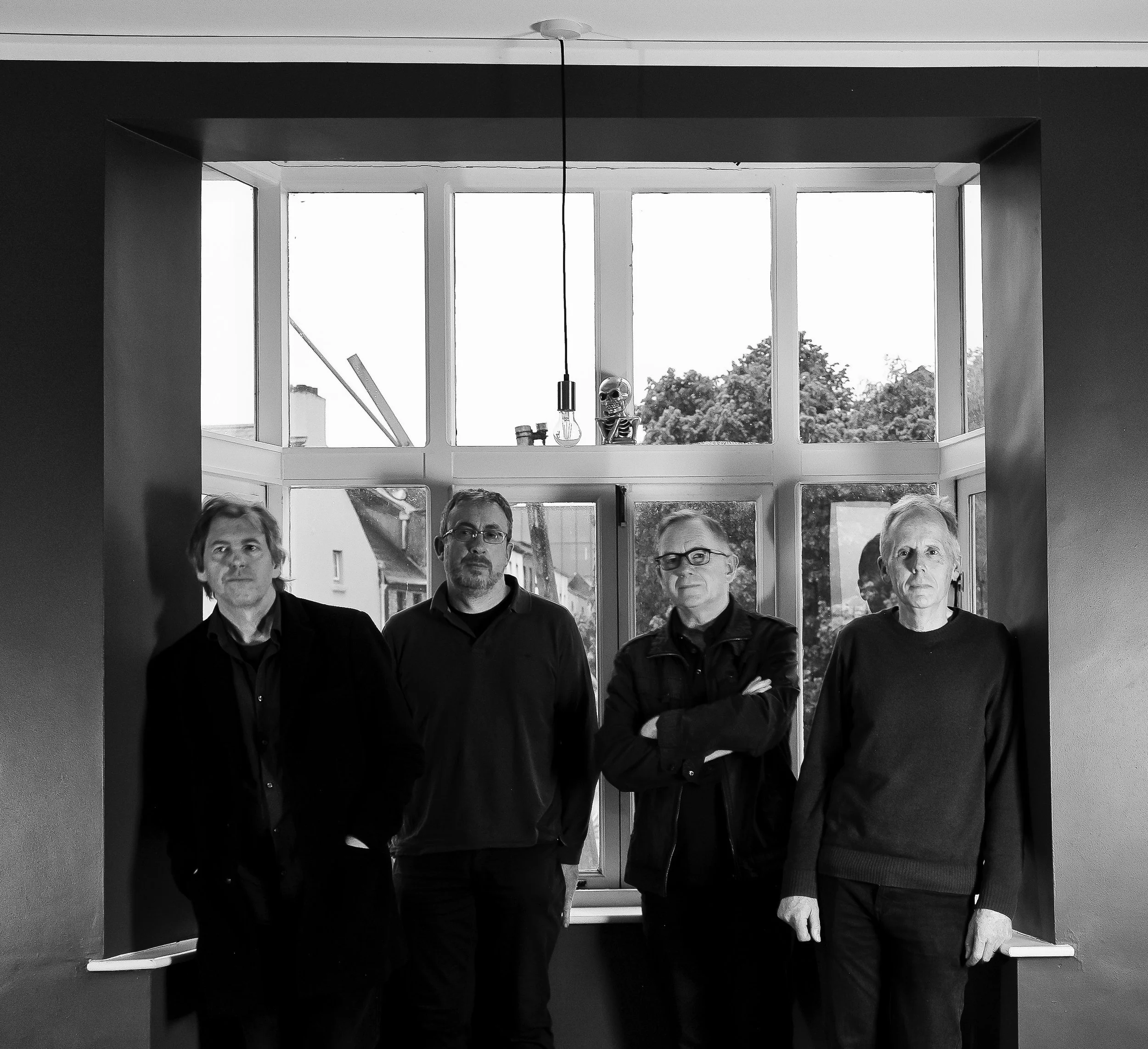
Boa Morte: Maurice Hallissey (drums); Paul Ruxton (vocals, guitar, bass, keyboards); Cormac Gahan (vocals, keyboards, bass, guitar) and Bill Twomey (guitar, bass, keyboards, effects). Photograph by Fiona Tait.
Boa Morte hail from Cork and the four members have known each other since hanging out in the Liberty bar on South Main Street in the early 90s.
The Cork music scene at the time centred around the Liberty (or the Lib as it was affectionately known), a number venues in the vicinity of South Main Street and a cluster of four pubs on Union Quay.
Bands started out playing gigs in places such as The Phoenix on Union Quay before graduating to The Shelter on Tuckey Street which offered an opportunity to play on a small stage with a decent PA. Nancy Spains on Barrack Street was a step up, a bigger venue that local bands could hire if they were feeling ambitious or badger local promoters for a support slot to a touring Irish band.
A stroll from Union Quay, onto George’s Quay and along Sullivan’s Quay to South Gate Bridge any evening would be soundtracked by the sound of bands rehearsing in rooms above pubs and decrepit, near-collapsing buildings. There was something in the air and it wasn’t just the smell of hops and roasted barley from the City’s two breweries.
The dream was a gig in Sir Henry’s or The Village, its sister venue downstairs. These were located at South Gate Bridge opposite Beamish and Crawford’s mock-Tudor Counting House and hosted touring International bands and bigger Irish bands. A support slot here guaranteed that everyone in town knew about your band.
Comet Records, the fulcrum of the scene, was around the corner on Washington Street. Gig posters adorned the walls and every local band aspired to have their demo on sale behind the counter and in the revolving tape racks inside the door on the left.
I can still remember in 1991 when The Shanks’ demo tape ‘Nothing Left to Go Home To’ traded places with Nirvana at the top of the “Comet Records Chart”. A demo tape and Nevermind – just let that sink in.
My radio documentaries about The Sultans of Ping (Dancing in the Disco - the story of The Sultans of Ping) and The Frank and Walters (We’ll Always Be Shouting For You - the story of The Frank and Walters) offer a snapshot of these innocent times.
The Franks and The Sultans signed record deals, emigrated to London and for a brief moment became darlings of the UK music weeklies. Snapping at their heals were a plethora of other great Cork bands including: The Shanks; LMNO Pelican; Emperor of Icecream; Collapse; Treehouse, A Cow in the Water, Manhole, and The Orange Fettishes.
The Boa Morte lads had been in a number of indie bands during this period.
Paul Ruxton was in a band called The Exploding Pencils. Maurice Hallissey played drums in what he describes as, “a weird, short-lived (but potentially brilliant) band called Peroxide Jones.”
I don’t remember these bands but Peroxide Jones practised in a band room above a pawn shop on George’s Quay. Maurice recalls that, “we played one gig in Henry’s, then broke up when the singer Alan McDonald (aka Alan the Goth) moved to London.”
Bill Twomey and Cormac Gahan were in The Lemmings with drummer Paul Green. The Lemmings made it out of the band room and recorded a demo in Fiona Studios in Fermoy. Dave Fanning played their song ‘Burn’, the earliest incarnation of the track that would later be released as a single by Boa Morte, on his radio show one night.
The easiest way to understand the transition in style made during these years is to listen to these two versions of ‘Burn’. The 1993 Pavement-esque Lemmings’ demo version (as archived by The Fanning Sessions Archive) and the slowed-down shuffle of Boa Morte’s 2002 version. They are night and day.
Eventually in late-1996 Bill and Cormac come together with Paul and Maurice to form Hubble.
I saw an early Hubble gig when they supported The Frank and Walters on Friday 30 May 1997, a Sir Henry’s gig just before Grand Parade was released. Hubble were a bit ramshackle that night and looked nervous. That was totally understandable, supporting The Franks was a huge gig for any young band but especially in Cork where a hometown Franks’ show ensured a sold out crowd looking on in judgement.
A few weeks earlier Hubble entered a studio and recorded three songs, released on a cassette they titled Go Biology!
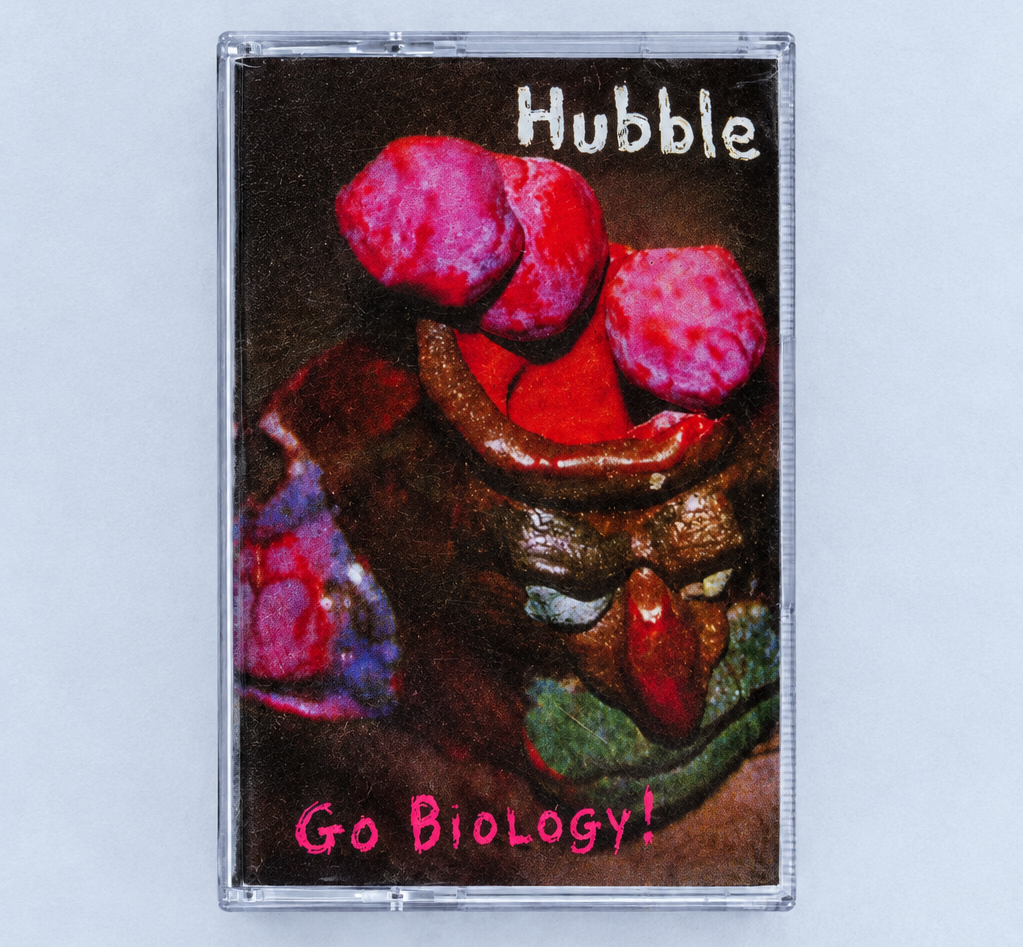
Hubble - Go Biology! (1997). Photograph by Paul McDermott.
Go Biology! (also archived on The Fanning Sessions Archive) was recorded by John O’Mahony and was one of the first studio experiences for both band and engineer. These days O’Mahony spends his time between New York and Los Angeles and has a list of studio credits that includes mixing and co-production duties for artists as disparate as: Metric; Coldplay; The Cribs; Kaiser Chiefs; James Vincent McMorrow; Depeche Mode; A-ha; Courtney Love; The Kills; LCD Soundsystem and many others.
Back in March 1997 O’Mahony was a young studio engineer learning his craft and Hubble were just another local band trying to get a decent recording that they could press up on tape, sell in Comet Records and flog at gigs. Hubble wore their influences on their sleeves: it was obvious that they were indebted to Pavement and Teenage Fanclub.
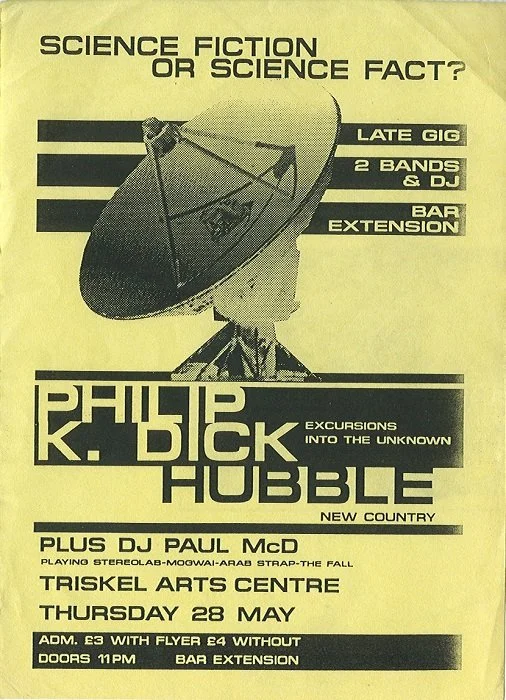
Philip K. Dick and Hubble - Thursday 28 May, 1998. Flyer by Brian O’Shaughnessy.
A year later Hubble played in the Triskel Arts Centre. I spun records in the bar and the flyer (above) states that I intended to play tunes by bands such as “Stereolab, Mogwai, Arab Strap and The Fall”.
I know exactly what tunes by each of the four bands I would have played at the time and what’s funny is that if I was playing a gig tomorrow I could easily get away with playing the same type of set. Stereolab, Mogwai and Arab Strap are all still going and releasing brilliantly exciting records and even though Mark E. Smith passed away back in 2018, The Fall are bigger than ever, a fact I recently discussed with Paul Hanley, the band’s former drummer (Das Gruppe on the Wall by Paul Hanley).
What’s also worth noting about the flyer for the Triskel gig is that Hubble are given the descriptor “New Country”.
The terms “New Country”, “Alternative Country”, “Alt-Country” or “Americana” began to be used from about the mid-90s to describe a strand of bands and artists that played a style of roots-based country music indebted to artists such as Lucinda Williams, Steve Earle, Townes Van Zandt, Gram Parsons, Emmylou Harris, The Flying Burrito Brothers, The Byrds and others.
Uncle Tupelo, Whiskeytown, The Handsome Family, Palace Brothers, Damien Jurado, Songs: Ohia and others became associated with the genre and labels such as Glitterhouse Records in Germany, Munich Records in the Netherlands, Loose Records in London, Shoeshine Records in Glasgow and Independent Records in Dublin would eventually come to specialise in the sound.
In a pre-internet era the genre had its own ecosystem of print magazines. No Depression in the US and Comes With a Smile in the UK were mostly devoted to this new version of American roots music. Indeed, Uncut magazine’s landmark Sounds of the New West cover-mounted CD, a compilation that came to define the genre, was released in September 1998.

Boa Morte: Cormac Gahan, Paul Ruxton, Bill Twomey and Maurice Hallissey.
In 2010 I spoke to Boa Morte’s Cormac Gahan on Songs To Learn And Sing, my old Dublin City FM radio show. During our interview I told Cormac that five years earlier I had interviewed Damien Jurado. Jurado had told me that growing up he was a huge fan of Nirvana and Black Flag, and then there came a point when he started listening to what we’d call Americana, or what he called folk music.
I asked Cormac if he could relate to Jurado’s experience. Was there a record, or had he witnessed a gig that had influenced him and the others in Boa Morte, or Hubble as they were at the time, to consider changing their sound from an indie band into something slower, more rootsier?
“Yeah, that’s a really interesting one,” answered Cormac.
“We were listening to all that stuff, Nirvana and Pavement and you know we even tried playing in that style. I started listening to things like The Triffids and early Palace Brothers stuff and I’ve always been a big fan of Leonard Cohen and for instance Paul in the band is a huge Neil Young fan. I suppose we all started listening to that sort of thing at the same time.”
Cormac continued: “American Music Club’s California, when that came out, we just thought it was great. That you could do that, play that type of music, no distortion sounds on your guitar. Harking back to the folk stuff of Nick Drake and that sort of era. We had just all started playing in that way, playing Neil Young type chords, clean on the electric guitar. So, we found it suited us.”
It’s a theme I touched on again when I spoke to the band for Episode 29 of To Here Knows When - Great Irish Albums Revisited.
“We were all massive fans of the first Palace Brothers album,” said Bill.
The others agreed. “Palace is a good reference point and something that we latched onto,” said Paul.
Cormac added that seeing the video for the Palace Brothers’ ‘Ohio Boat River Song’ on No Disco was, “a big point in time for us.”
They had found their sound.

Passenger Measure Your Time EP (Constrictor Records, 1998). Photograph by Paul McDermott.
The lads weren’t alone, other bands in the country had also become enamoured with Alternative Country. In Dublin, Jubilee Allstars released a few 7” singles on Dead Elvis Records before signing to Sony subsidiary Lakota Records.
A few weeks before the May 1998 Triskel gig the lads in Hubble had booked studio time. Needing a producer to record their first EP they looked at a Jubilee Allstars record and spotted the name Marc Carolan.
“He was doing work with the Jubilee Allstars at the time,” remembers Cormac.
“We started looking at recording techniques because it’s not as easy to record that type of stuff as you’d think. A lot of producers would have set ways of doing things. You need a good, clean drum sound, it’s more difficult than we expected. But the first thing to do is to get the right producer,” continued Cormac.
“So there were other people in the country doing the same sort of thing that we wanted to do, and we just sort of picked up on that and booked Marc Carolan.”
By the time Passenger Measure Your Time, the Marc Carolan-produced EP, was released in late 1998 Hubble had changed their name to Boa Morte.

Soon It Will Come Time To Face The World Outside (Shoeshine Records, 2002). Photograph by Paul McDermott.
Passenger Measure Your Time led to a record deal with Mood Food Records. At the time the North Carolina label had Whiskeytown on their roster, so this looked like the perfect home for Boa Morte.
“Mood Food, the label we were signed to, put us in contact with producer Daniel Presley,” remembers Bill.
“I think he had done work for them previously. So he came over and he spent a week with us up in Blarney, in Morris’ parents’ place. It’s a farm. And our practice room was literally a loft above a milking parlour. So we spent a week above a milking parlour with Daniel. He’s a great guy and musically, he’s just super sharp, but he’s just one of the funniest people you’re ever likely to meet as well.”

‘Clarence White’/’Burn’ (Shoeshine Records 7”, 2002). Photographs by Paul McDermott.
The band were looking for someone who could produce a warm, live sound.
“The funny thing about Daniel,” recalls Cormac.
“Is that he had actually produced an album by a band called Spain, The Blue Moods of Spain, and that album was the sound we were looking for. It probably would have been one of the things we would have played a producer, to give them an idea of the sound we were after, and it just so happened that he had produced and done the string arrangements on that album.”
Label issues meant that recordings made by the band in Sun Studios in Dublin, with Presley producing and Marc Carolan mixing, ended up in limbo for a number of years.
“The whole album was fully recorded, overdubs, done. Mixed, in the can completely,” remembers Bill.
“But then the label collapsed, it went bankrupt. They refused to give us the masters, so we had to go through a legal route to get the masters back. We eventually got the masters back into our own possession.”
The band started looking around for another label.
“In those days, you’d pick up a record and the actual postal address of the record label would be on the record,” remembers Cormac.
“You’d go through your record collection and just stick a CD in the post.”
Teenage Fanclub’s Francis Macdonald was running Glasgow’s Shoeshine Records at the time. He had released great records by Laura Cantrell, Paul Burch, Radio Sweethearts, Ben Vaughn and others, a CD was dispatched to Glasgow.
“Legend has it that Teenage Fanclub were recording at the time in the early 2000s when Francis Macdonald stuck our CD on in the studio, which is a good place to hear it on big speakers,” says Cormac.
“And, so they’re suitably impressed. Norman Blake told him [Macdonald] to sign us to the label.”
“It was probably a pretty good fit because his label, Shoeshine, had a lot of folk-oriented music, country-oriented, a fairly diverse range of artists really, but it seemed to be a pretty good fit for us overall.”
Soon It Will Come Time To Face The World Outside was released to critical acclaim in 2002. Uncut magazine wrote: “Occasionally a record comes along that’s so intimate and immediate you want to disconnect the phone, get under the duvet and forget the outside world.”
Mojo magazine were equally effusive writing: “By the time you’ve got the full measure of their sombre elegance, the band are confirmed masters, not slaves, of the idiom.”
John Peel also fell under the band’s spell playing tracks from the album on his late night BBC show. On one memorable occasion he back announced ‘Clarence White’, the band’s tribute to The Byrds’ guitarist with the words: “It’s by Boa Morte, as in the footballer of the same name, and it’s called ‘Clarence White’, as in the steel-guitar player of the same name.”
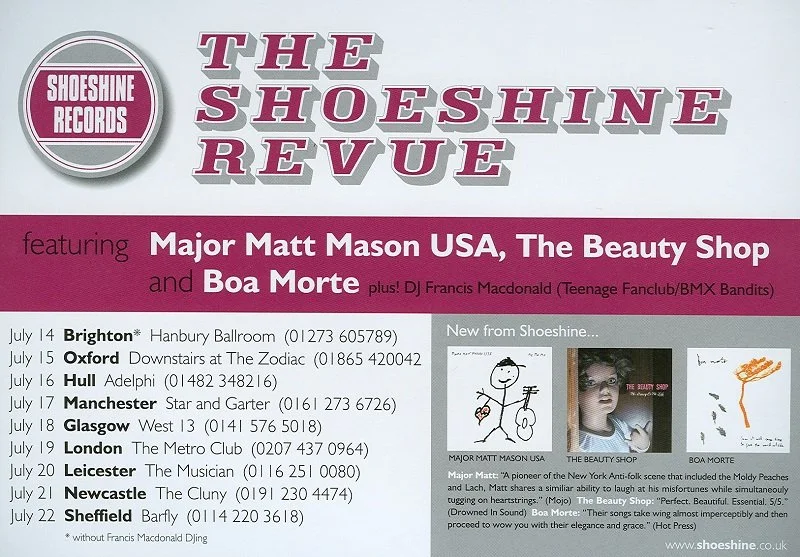
The Shoeshine Revue flyer - UK tour 2002.
The band toured the UK with labelmates The Beauty Shop and Major Matt Mason USA and played gigs with Howe Gelb and Calexico. In January 2003 they supported Teenage Fanclub on an Irish tour.
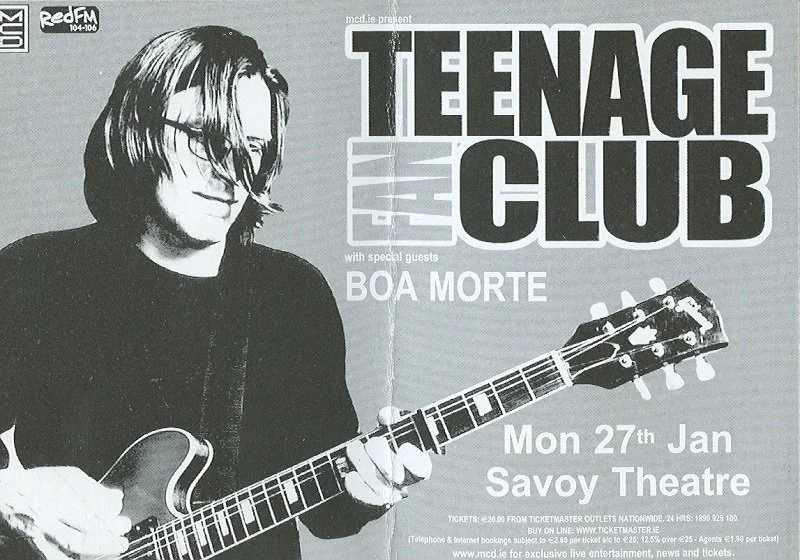
Teenage Fanclub and Boa Morte flyer - Monday 27 January 2003.
The Dial Waltz, the band’s second album was released in 2010. At the time Macdonald was winding down Shoeshine, to concentrate on managing Camera Obscura and playing in Teenage Fanclub, so the band released it on their own Kicking A Can label. Again produced by Daniel Presley, the album was even sparser than its predecessor.
Q magazine called it, “A supremely elegant soundtrack for staring into your half-empty pint.” The “New Country” descriptor was gone and now the band described their sound as “Contemporary Folk”.
As mentioned earlier, at the time of the album’s release I spoke to Cormac on my old Dublin City FM radio show. We chatted about the recording of the album and Cormac introduced songs by Joanna Newsom, The Unthanks, Adrian Crowley, and Icelanders Jóhann Jóhannsson and Hildur Guðnadóttir.

The Dial Waltz (Kicking A Can Records, 2010). Photograph by Paul McDermott.
I asked Cormac if those choices were representative of what he was then listening to?
“I’m listening to a lot of post classical or neo-classical type of stuff,” answered Cormac.
“A lot of it is coming out of Iceland, Jóhann Jóhannsson but even people like Max Richter, soundtrack music, heavy strings, heavy orchestration, I think it’s great, music that’s so lush and full.”
He wasn’t sure if this music was having an influence on Boa Morte’s sound at the time.
“I wonder does it somehow influence the string sections that we put on the ends of some of the songs.”

Before There Was Air (Gare Du Nord Records, 2019). Photograph by Paul McDermott.
Before There Was Air, the band’s third album arrived in 2019 on the Gare Du Nord record label, and saw the band work with new producer James Darkin. Basic tracks were layered with drones, analogue synths, wind and string instruments, and effects.
The band’s sound had slowly developed over the years from alt-country, to contemporary folk to now absorb avant-folk, electronic and ambient influences. A change that was recognised by RnR magazine when they wrote: “The tunes flow into each other creating the sense of a suite, as if Brian Eno’s Apollo, Atmospheres and Soundtracks had been recorded instead by Robert Wyatt and James Yorkston.”

The Total Space (Gare Du Nord Records, 2023). Photograph by Paul McDermott.
2023’s The Total Space continued the band’s aural adventures into ambient, drone and synthesised sounds. Daniel Presley returned to produce, Irish composer Justin Grounds did some additional recording and played violin and Stephen Shannon mixed the record. Killian Laher in No More Workhorse called it: “either a folky album with ambient bits or a full-on excursion into the folkier side of ambient. What it boils down to is their best album to date.”
Which brings us neatly up to date.
Signal: Lost reflects another progression of ideas since The Total Space. James Darkin produces again having last worked with the band on their third album, Before There Was Air. The band utilised a number of recording studios before spending a long-time mixing in their own studio. They describe the recording method as allowing them to move, “from lo-fi to hi-fi and back again.”
Opener ‘April 22’ comes to life with the sound of buzzing static before a simple piano surfaces. The layers built as other textures and instruments emerge. Next comes recent single ‘The Following On’ which takes us into the first of two short vignettes (named for GPS coordinates pinpointing two of the locations where the album was recorded: the band’s own studio in Cork and Hellfire Studios in Dublin).
In between these two vignettes are a suite of six songs. Among these songs are three of the band’s strongest to date: ‘The Song is Sung No More’, ‘Bird That Flies’ and ‘Dream State’. On the latter, a slow minimal track, the band’s instrumentation is augmented by Darach Ó Torna on saxophone, Jack Mahony on trombone and Hilary Bow’s vocals. It’s a thing of beauty.
Following the second short GPS vignette we finish with the near seven-minute ‘The Garden Part 2’ (‘The Garden’ appeared on Before There Was Air), a slow-building epic that ends to the sound of an electric organ and Jack Mahony’s trombone.
Signal:Lost: demands repeated listening and eventually reveals itself as the band’s best album to date.
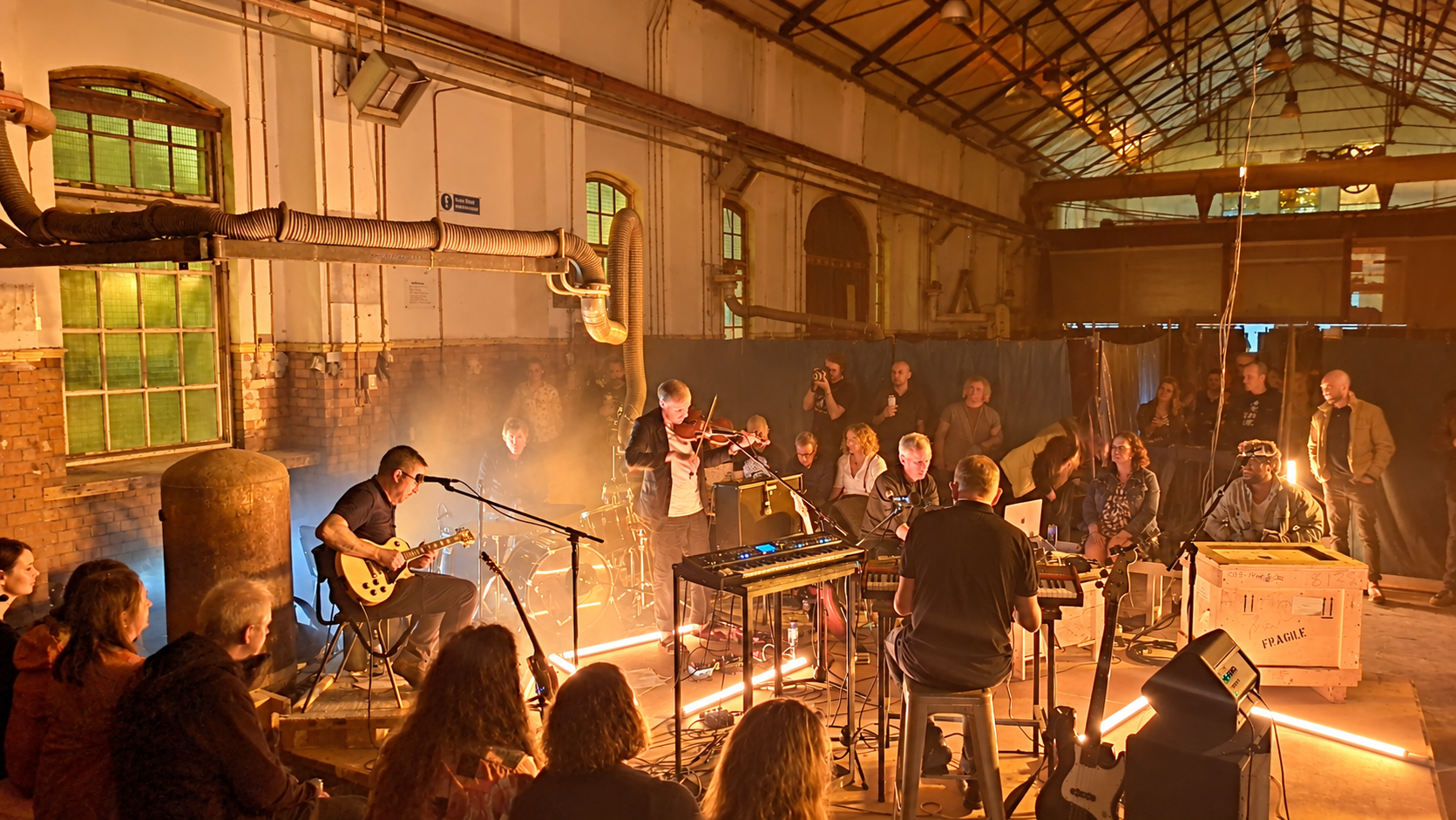
Boa Morte (w/ Justin Grounds) live at the National Sculpture Factory, 16 June, 2023. Photograph by Paul McDermott.
Boa Morte usually take their time. With each release we’re left wondering when they’ll return. This time around the wait is going to be shorter as the band have promised that Signal: Lost will be followed in March 2027 by The Following On.
They’ve described The Following On as, “a quieter and slightly more ambient record, two sides of a similar coin; a double album of sorts, albeit released six months apart.”
I for one can’t wait to hear it.
For further reading/listening…
Signal: Lost is available on Bandcamp…
Boa Morte’s Paul Ruxton, Cormac Gahan and Bill Twomey joined me to revisit Soon It Will Come Time To Face The World Outside on EP29 of To Here Knows When – Great Irish Albums Revisited…
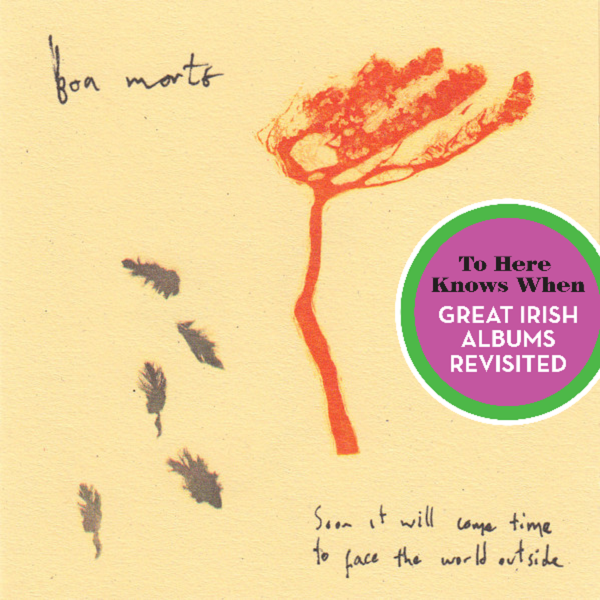
by Boa Morte
My To Here Knows When column from Issue 12 of The Goo focused on Boa Morte’s debut…

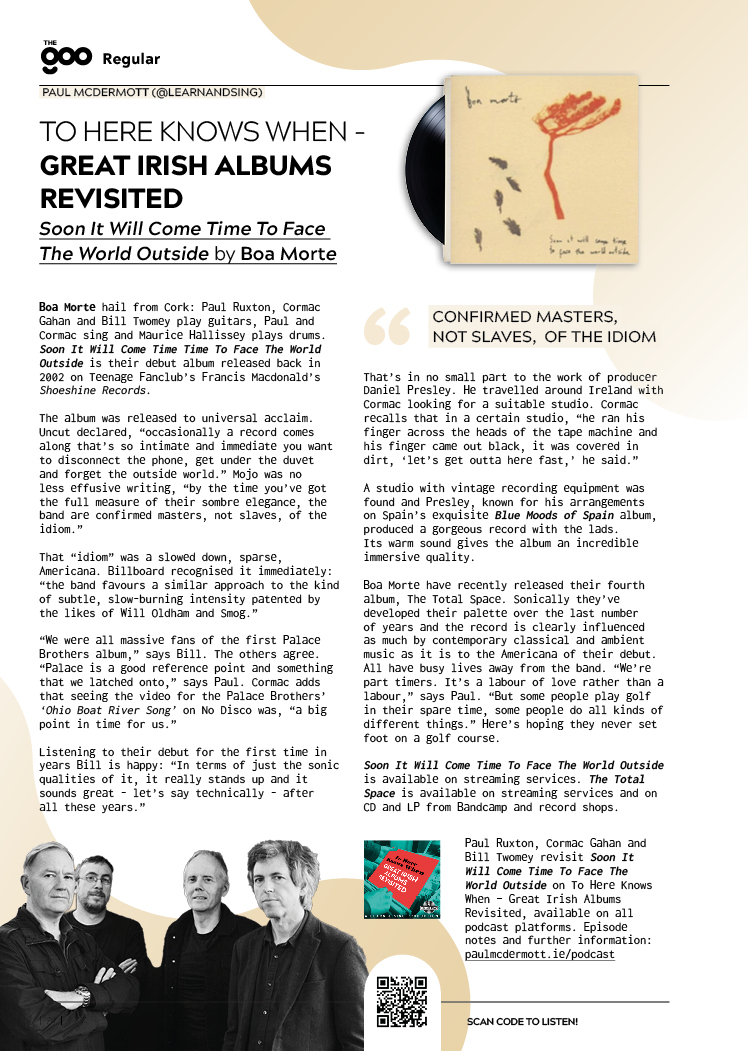
by Paul McDermott
The Goo - Issue 12 (May-June 2023)
In 2010 Cormac Gahan joined me on Songs To Learn And Sing, my old Dublin City FM radio show to discuss The Dial Waltz, the band’s second album.